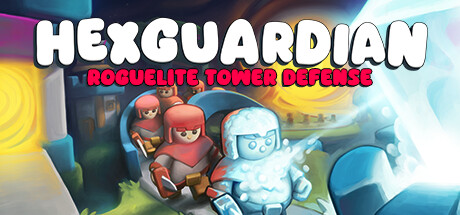
Hexguardian is a rougelite tower defense. The game itself is simple, you build the
area around your castle using hex tiles. These hex tiles contain two kinds of ways,
water and road. You have much more control over the level layout than with
Nordhold. There is no automatic card placement,
you always can place your hex tile anywhere it fits.
There is a lot of meta progression, with some capabilities that you need to unlock that
improve the base gold generation rate. Other capabilities include new units or towers.
You can also exclude units or towers from being drawn during gameplay. This helps
when you want the capabilities behind towers but don't want the tower card
to clutter up your gameplay.
The game looks simplistic but is surprisingly long fun. The music does not get
on my nerves, and there are (at least) six kinds of worlds each with their
own music. The difficulty progression is not too steep but steep enough
to keep me engaged. I bought the game in a sale for ~ 10€ , which is
worth the price.

I bought the game for 3€ in a Steam sale, and for that money it is well worth the time.
The game runs very smooth on a 16GB machine with an RTX 1080 card.
The Good
Story
Story is serviceable. The Bad Guy is Really Evil. You are the son of a resistance fighter in some random tibetan/nepalese/whatever country. Your mother
left for the US with you as a child, but for some reason still trained you to be a fighter. At least, nobody mentions or wonders why you are handy with all
those weapons that are lying around. Also, nobody asks
where you were or how your life was, but accepts you as the son of the former leader. The story sets you up in the game and is motivation for some of
the missions, and that's it. It is by lengths better than in Assassins Creed: Origins (the "Egypt" episode).
Gameplay
The gameplay is good. It is a typical UbiSoft game, with lots and lots of collectibles, but at least you can buy maps that list the collectible locations. The
fighting is good, despite the occasional QuickTime event.
Update: After four weeks and getting in 10 hours of gameplay, I find that
the curse of Ubisoft still applies. The gameplay is a tedious collectathon with
lots of breadth but no depth. The constant nagging of karma missions while I'm
exploring, the lack of direction and the boring story made me quit the game
after 10 hours in.
The Bad
The intro is unskippable, which is highly inconvenient if the game crashes juuust before the end of the intro. Otherwise I haven't encountered
any bad bugs. The convenience of playing old games is that you get to play the best version there is. At least for offline games, where they
don't patch out songs from the soundtrack and so on.
The Ugly
The game is connected to the UbiSoft launcher, even when you buy it through Steam. That launcher updates itself every time you launch it through Steam. It also requires a (burner) email address for launching the game.
I should maybe start looking for a crack/patch that allows to remove the UbiSoft launcher by replacing it with a small program that mimics it but uses fewer resources.
At least Far Cry 4 does not have microtransactions.
An HTML game that implements the addictive features of Gacha games very well!
Link: Number Gacha

It's a really hard sokoban-style puzzle game about grilling sausages, with very little handholding. It does not tell any story but simply drops you into the puzzles without any explanation. On the flip side, the levels are well thought through and build on each other.
It seems to sell for €30, but I got it for 5€ in a sale, which is quite worth the money.
I struggled with the first "world", averaging maybe one or two levels a day with light play. The second world introduces three new mechanics, which make for complex puzzles again.
Unfortunately, the biggest level in the second world introduces three further mechanics and in addition also is very long and tedious, which put me off the game. I watched the solution on Youtube, and maybe I will revisit the game but that level introduces too many new mechanics without a way to play around with them, and in a setting where each of the new mechanics must be executed flawlessly in a 60+ move sequence.
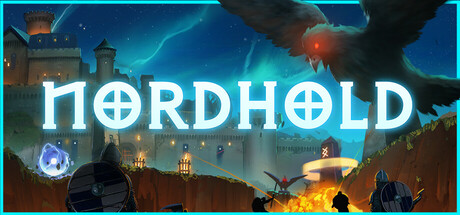
A surprisingly complex tower defense. It has the appeal of the
GemCraft series, but
the mechanics are different. You build your defense towers along a path on
hexagonal terrain and at the same time build up the economy of your village
to provide for more resources to build more towers. The first games you play
are spent on unlocking all the buildings in some kind of meta-game. Once you
have unlocked all the buildings, there is a change to the whole game dynamic
as now you can chase beating the game to level 30, when all hex tiles are
exhausted. After beating level 30, there is the chase of high-scores by getting
your economy and defense good enough to survive wave after wave.
The game could be better, as the first 10 to 15 rounds of a game are mainly about kickstarting your economy, and that slog gets somewhat repetitive. Instead of having to play through these rounds, the game could start you in round 8 (or whatever) with ample resources instead. Otherwise, there is lots of strategy involved combining the right kinds of towers to find synergies. There is the bad luck of drawing bad tiles, but that usually isn't too punishing.
If you like tower defense games, this one is certainly one of the best in the last 5 years.